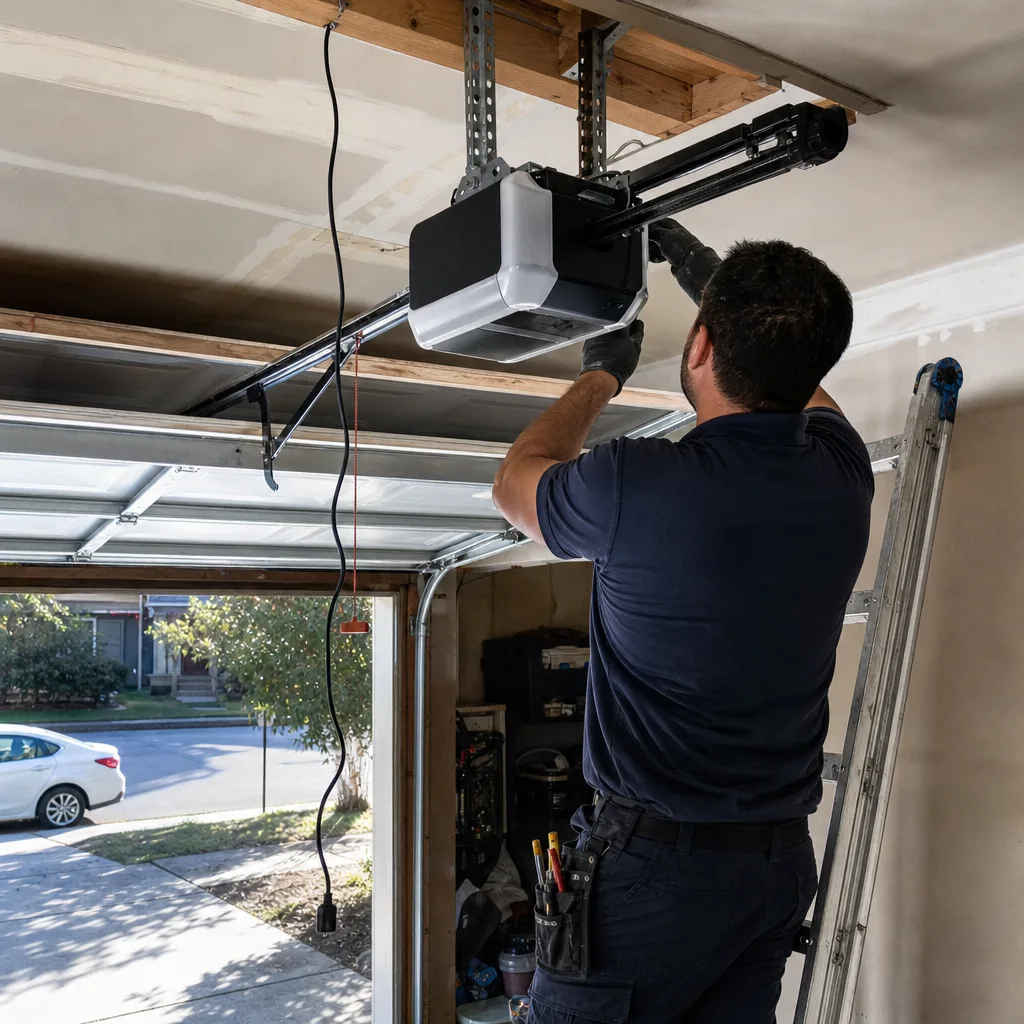
Last updated November 21, 2026
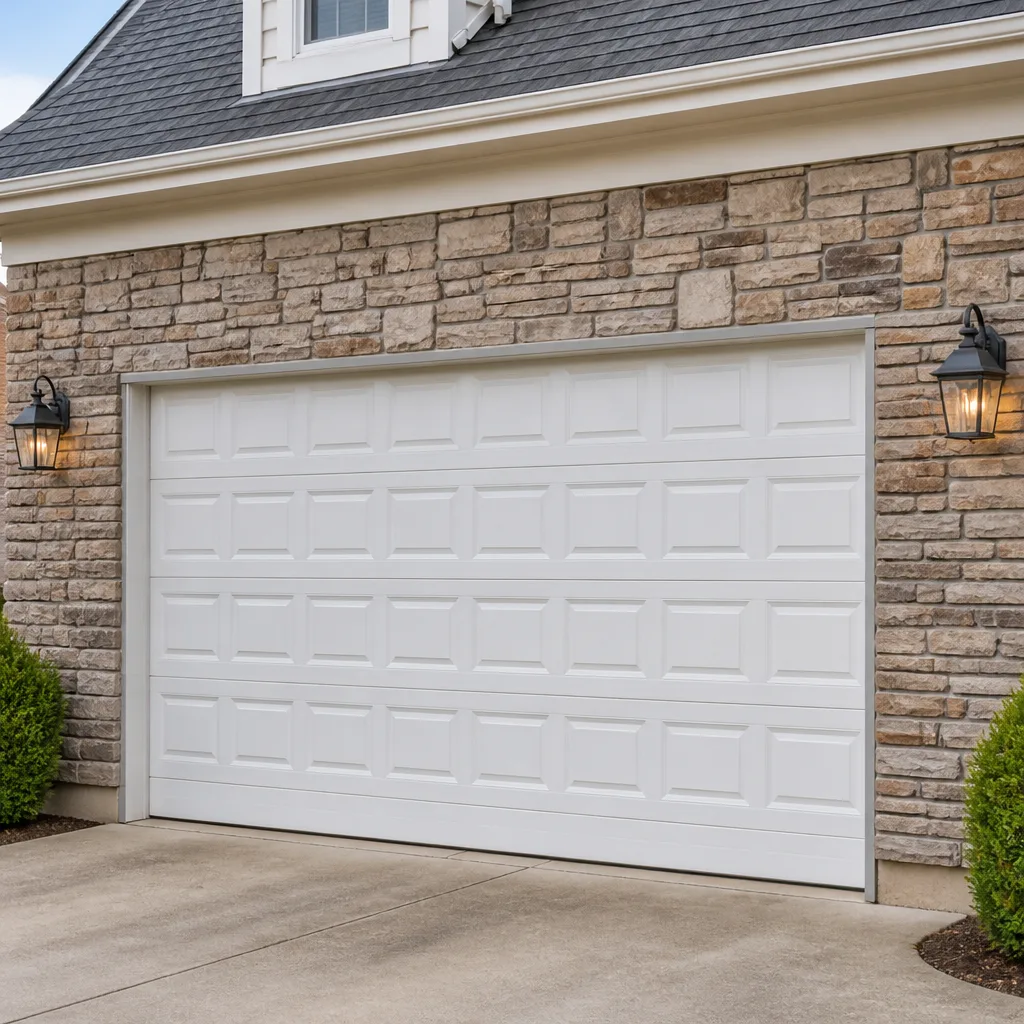 Raised-panel steel
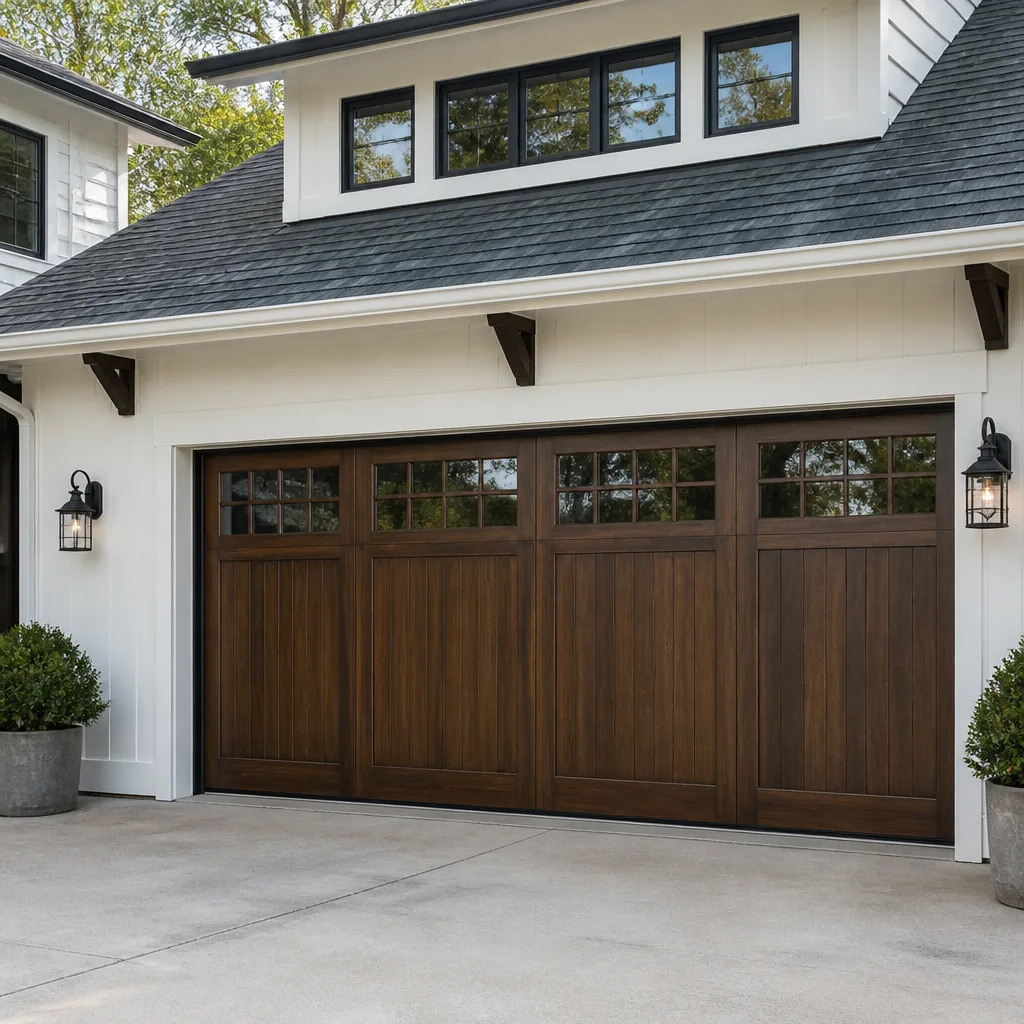
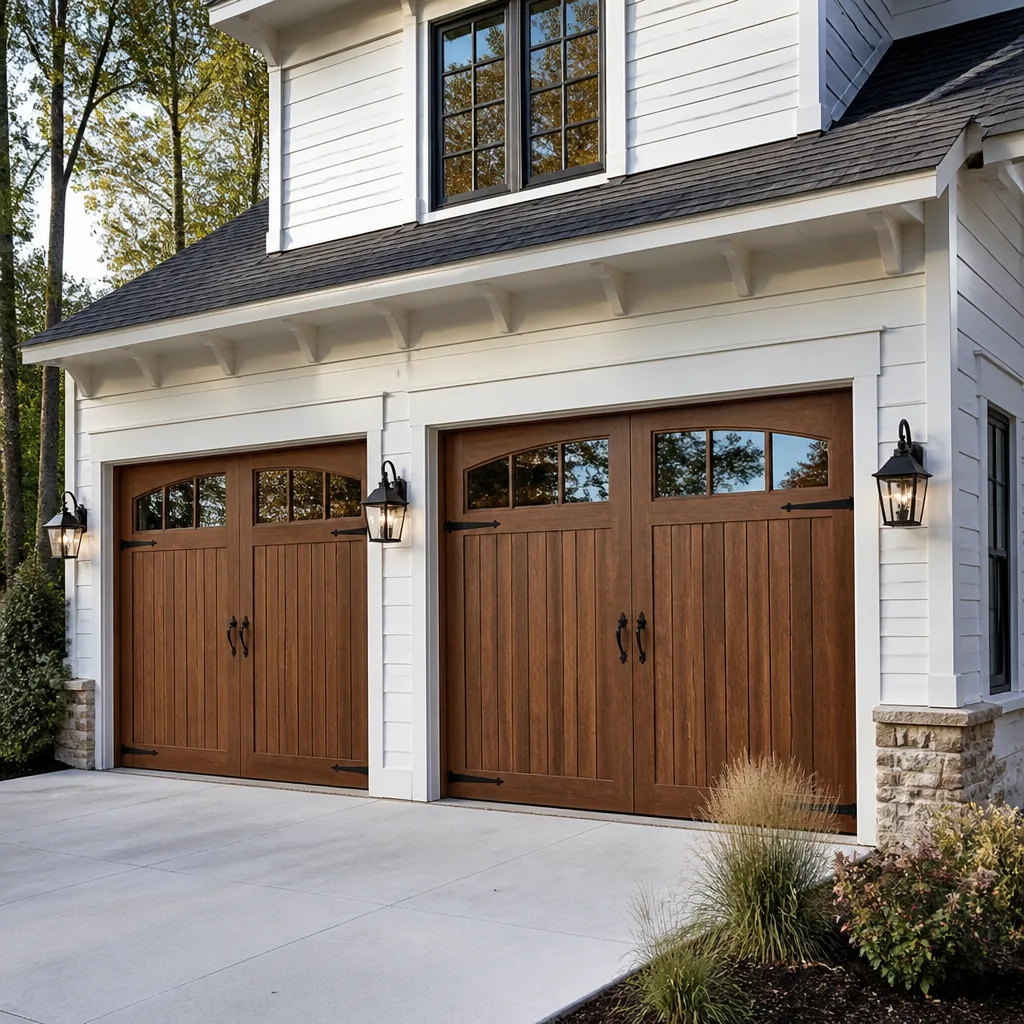 Carriage house
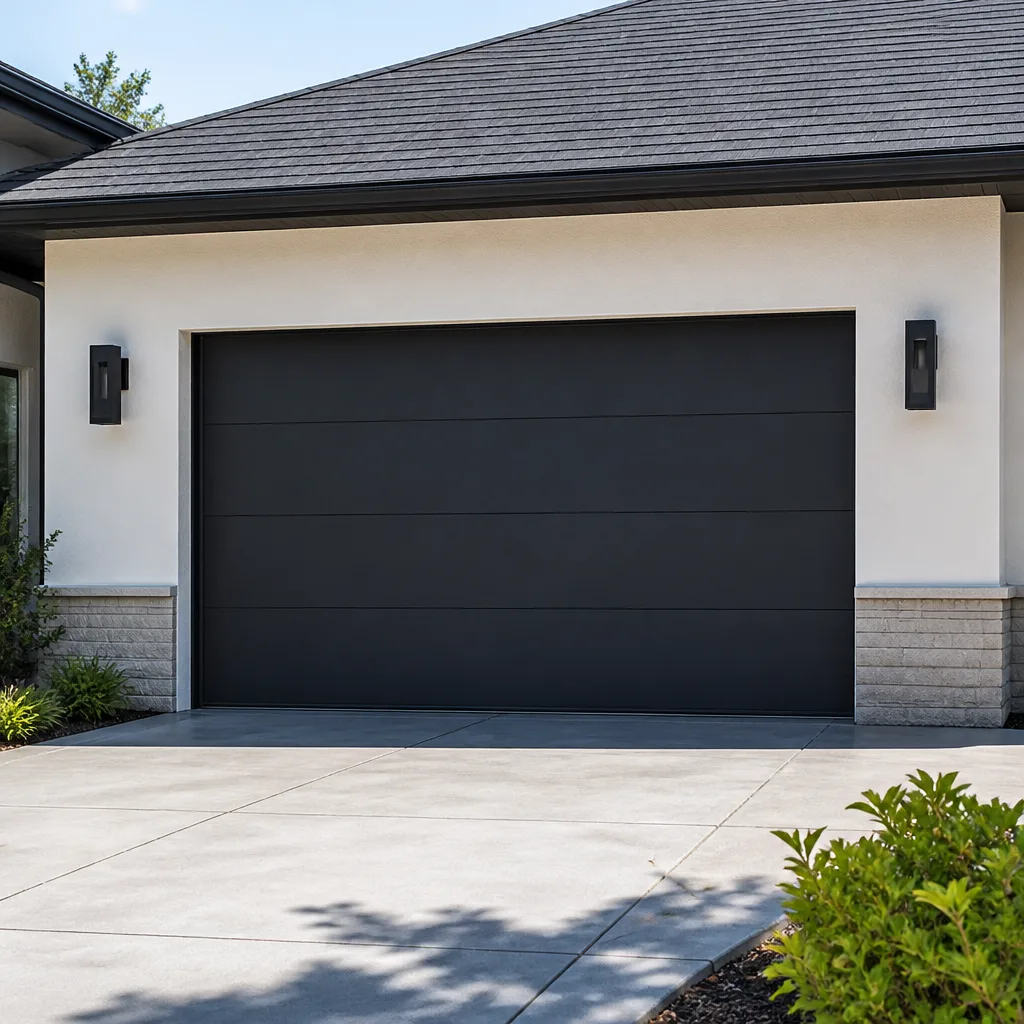 Modern flush
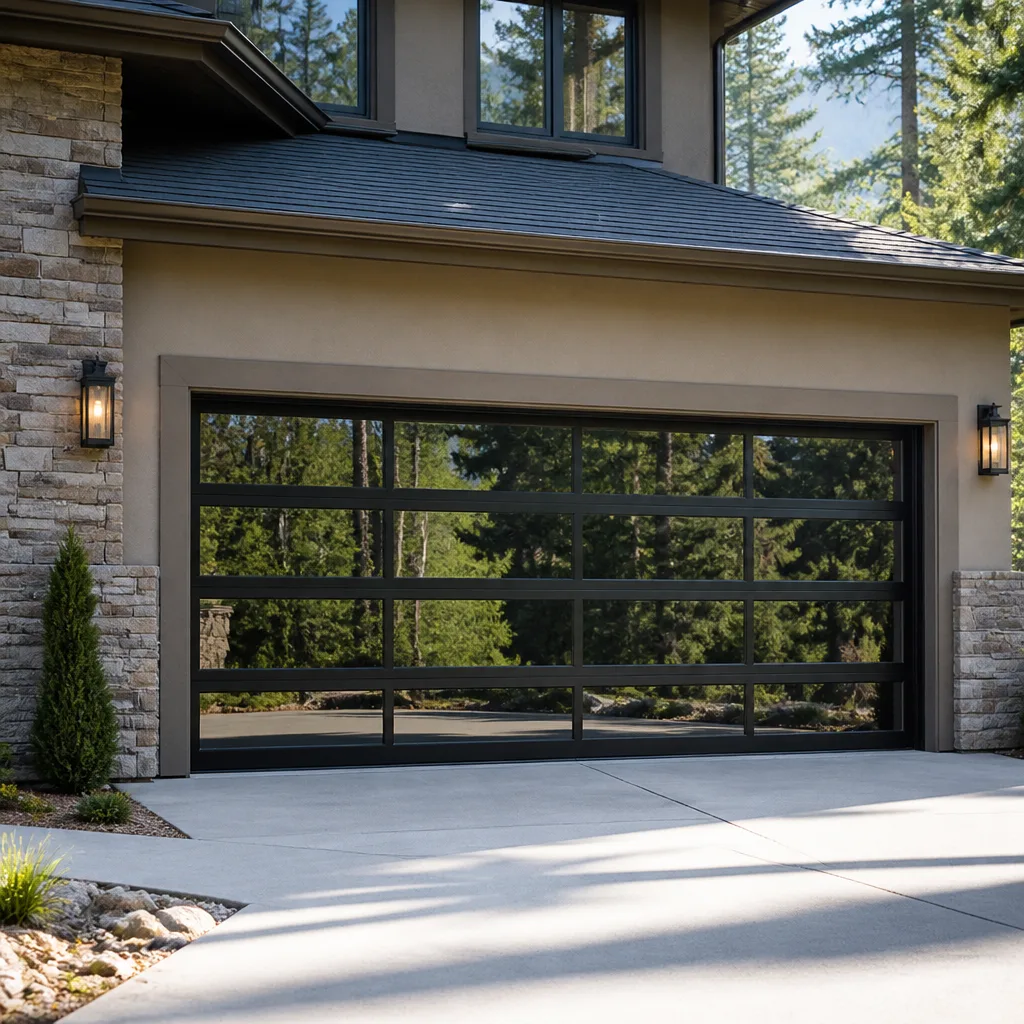 Full-view glass
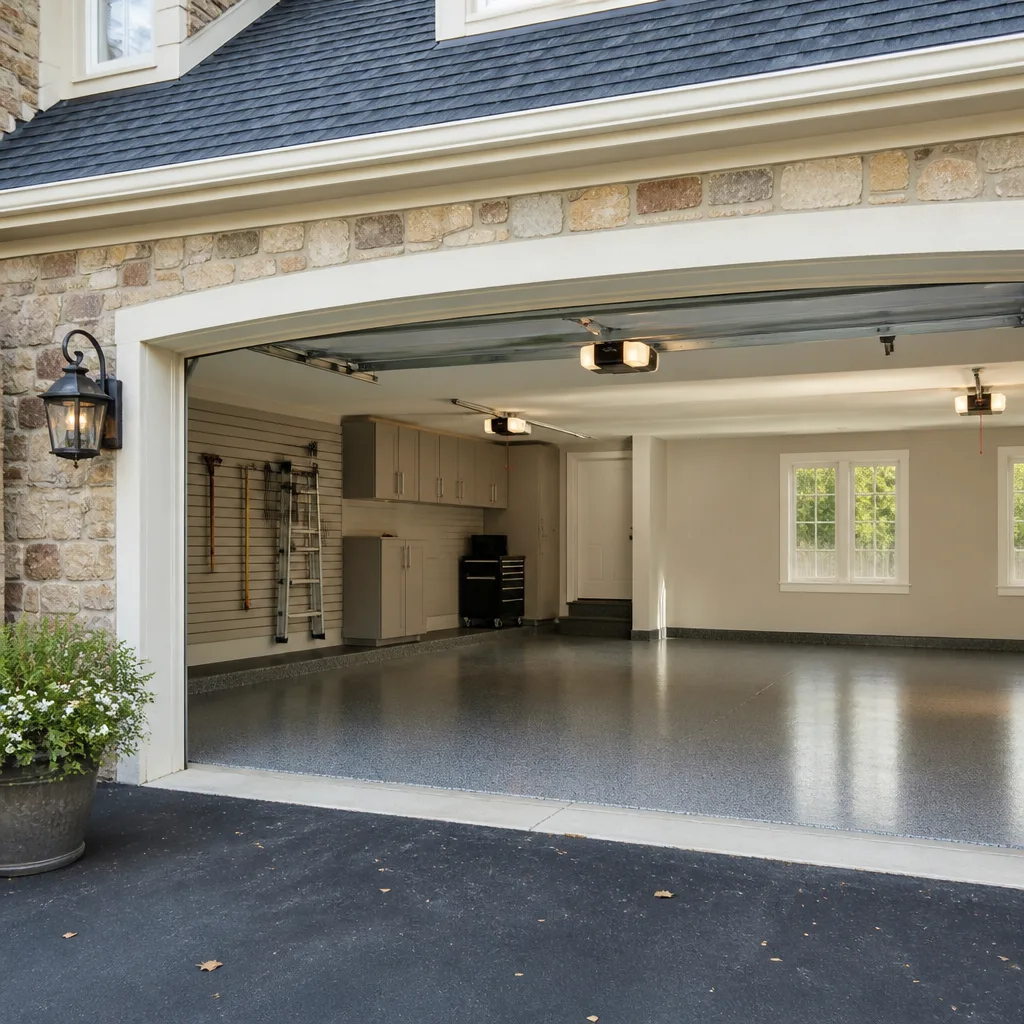 LiftMaster openers
 Chamberlain openers
Full 25-point door and opener safety check with every visit - springs, cables, rollers, tracks, and your LiftMaster or Chamberlain opener included
You get a price before we start. It does not change when the pro arrives.
Get your free estimateGarage Door Emergency Preparedness Guide for Germantown Homes
A garage door that won’t open during a power outage isn’t a malfunction. Every automatic opener has a manual release cord, and pulling it is a five-minute fix. But most Germantown homeowners have never located that cord, and a few who have pulled it at the wrong moment turned a simple outage into a service call. The difference between a manageable evening and an emergency usually comes down to preparation done weeks earlier. This guide covers how to operate a manual release safely, which openers survive an outage, what to keep within reach, how Germantown’s ice storms and wind events cause door failures, and how to secure a stuck door without making things worse.
Quick Answer
Garage door emergencies in Germantown are manageable when you prepare ahead: find your manual release cord, confirm whether your LiftMaster or Chamberlain opener has battery backup, keep an emergency key and lubricant where you can reach them, and know when to call a technician rather than force the door. If a spring is broken or the door is off track, stop and call a professional. The most dangerous mistakes happen when a homeowner pulls a release on a door that’s already damaged or keeps cycling an opener against a frozen seal.
Styles & brands we work with
- Raised-panel steel
- Carriage house
- Modern flush
- Full-view glass
- LiftMaster openers
- Chamberlain openers
Table of Contents
- How do you operate a manual release safely?
- What happens to your opener during a power outage?
- What should you keep accessible for a garage door emergency?
- Which Germantown weather events cause garage door emergencies?
- How do you secure a garage door that’s stuck open?
- Why is a broken spring the most dangerous emergency?
- How do you prevent emergencies in the first place?
How do you operate a manual release safely?
You pull the manual release cord to disconnect the door from the opener so you can raise it by hand. It’s attached to the trolley on the opener rail, usually hanging down within reach of someone standing in the garage. Pull it once, firmly, and the door travels free of the motor. To re-engage, run the opener and let the trolley reconnect automatically.
But the sequence matters. Before you pull, do three things:
- Check that no one is standing under the door.
- Look at the springs above the door. If a coil is visibly broken or the door sags on one side, do not pull the release.
- Have a second person ready to hold the door if it drops.
Here’s the failure most people miss. When a torsion or extension spring is broken, the door becomes dead weight. A standard double-car door can weigh far more than it looks, and the spring is what makes hand lifting possible. Pull the release on a door with a broken spring and the door won’t stay up. It will drop, and if anyone is beneath it, that’s a serious injury. On a door with intact springs, hand raising is normal. On a damaged door, hand raising is the wrong move.
If the spring is broken, leave the door down, secure it from the inside, and call for garage door spring repair. Never try to lift a heavy door alone or prop it up with a chair or broom handle. A door held open by an object is still under load from a compromised spring assembly, and that load can release without warning.
In our experience, homeowners who can locate the manual release without a flashlight are the ones who avoid emergencies. Walk out to your garage this week and find it. Note where it hangs. Tell everyone in the house.
What happens to your opener during a power outage?
If your opener has battery backup, the door still opens during an outage. If it doesn’t, the door stays locked in place until you use the manual release or the power returns. LiftMaster and Chamberlain are the most common openers in Germantown homes, and both offer battery backup models, but not every unit installed has it. You need to check before an outage, not during one.
How to verify:
- Look at the opener housing for a battery compartment, usually a small door or panel on the side or bottom.
- Check the wall control for a battery indicator light or test button.
- The owner’s manual lists the battery type and replacement interval. If you don’t have the manual, look up the model number on the manufacturer’s site.
- If the opener is a Genie or Craftsman unit, verify the same way. Not all models in those lines have backup.
If you have backup, test it. Unplug the opener, press the remote, and see if the door moves. If it doesn’t, the battery is likely dead. A backup battery that’s never been tested is a backup that may not work. Replace batteries on the manufacturer’s recommended schedule, whether or not you’ve used them.
If you don’t have backup, the manual release is your only option, and that brings us back to the spring check. A door with a broken spring plus no battery backup is the hardest situation a homeowner faces alone. That’s the point to call for garage door opener repair and let a technician handle the door safely. Outages are unpredictable in Germantown, especially after a storm, so knowing which category your opener falls into ahead of time is the whole game.
What should you keep accessible for a garage door emergency?
Most emergency supplies live in the garage, and the garage is the room that fails when something goes wrong. A flashlight stored on the shelf next to a door that won’t open is useless. Keep the essentials outside the garage or on a hook by the door into the house, where you can grab them no matter what the door is doing.
The four items to keep within reach:
- Manual release location: not the cord itself (it stays on the trolley), but a note or a photograph showing where it is. A paper note in a kitchen drawer works. So does a photo on your phone.
- Emergency key: if your garage has an exterior lock, the emergency key lets you out of the door if you’re trapped inside or in if you can’t get the overhead door open. Store it on your car keys or in a lockbox, not in the garage.
- Lubricant: a garage door specific lubricant for hinges, rollers, and tracks. Keep a can in the house or a garden shed. It’s not an emergency repair tool, but a door that’s been squealing and sticking for months frequently fails at the worst time, and the fix starts with lubrication.
- Your service provider’s contact number: written down, not just saved in your phone. If your phone is dead or you’re using someone else’s, you need it on paper. Save (844) 575-0084 where the whole household can find it.
One more thing: a portable phone charger and a working flashlight. During a power outage, an opener isn’t the only thing that stops working. An emergency is easier when you can see what you’re doing.
Which Germantown weather events cause garage door emergencies?
Germantown’s winters bring two weather patterns that most commonly cause garage door emergencies: ice storms and high winds. Both do their damage quietly, and both are repairable if you catch the failure early.
Ice storms and frozen bottom seals
When freezing rain or sleet runs down a garage door, it pools at the bottom and freezes the rubber seal to the concrete. The opener pushes against a door that can’t move. On most modern openers, the safety reverse kicks in and the door cycles back down, so you notice the door won’t close. But some homeowners force it by holding the button. That’s where damage starts. The opener’s torsion bar, cables, and drive mechanism take a load they weren’t designed to carry. A door that freezes to the ground and is repeatedly forced often ends up needing garage door repair for a stretching or kinked cable.
The safe approach: break the ice seal from the outside with a plastic scraper or warm water, never with a metal edge against the door. Don’t hammer, and don’t keep cycling the opener.
High winds and older panel hardware
Germantown sits in an area where strong wind events happen several times a year. Older doors, particularly wood-framed panels and doors installed with lightweight hardware, take stress on the hinges and rollers. A door that’s been rattling in wind for months is a door that’s one strong gust from coming off track. Wayne Dalton and Amarr doors from earlier decades are common in Germantown homes, and they’re built well, but the hardware on them is only as good as its age. Have a technician check hinge and roller condition before the worst of winter wind season.
What to watch
- Squealing or grinding when the door moves
- Visible sagging on one side
- A door that drifts down a foot after you raise it
- Rattling in wind that wasn’t there last year
Each of these is a small problem that becomes an emergency when ignored. The pattern in our experience is consistent: the door tells you weeks before it fails.
How do you secure a garage door that’s stuck open?
A garage door stuck open is an immediate security exposure, and it’s tempting to force it down. Don’t. The safest approach is to secure the opening without adding stress to damaged components, then wait for a technician. Here’s how to do it in order:
- Stay clear of the door tracks. A door that’s partially on its track can jump. Keep children and pets away.
- Turn off the opener. Unplug it or trip the breaker. This prevents accidental activation while someone is near the door.
- Use a temporary barrier from the inside. A piece of plywood or a heavy piece of furniture propped against the opening blocks the view and slows anyone who might look in. It doesn’t need to hold the door itself, just close off the space.
- Reach for the manual release only if you can see the springs are intact. If they are, you can lower the door by hand with a second person holding the door, but this requires care. If the spring is broken or the door is off track, leave it.
- If the door won’t come down at all, lock inside access. Secure the door between the garage and the house. Park the car outside for the night if needed.
- Call for emergency service. The sooner a technician is on the way, the sooner the home is fully secure.
Never try to reattach rollers to tracks or force a door back into the track. The tension on the cables is the biggest injury risk, and a hand in a loaded track is a hand that gets hurt. Germantown homeowners who handle this correctly call for emergency service within the first hour. A door braced against its opening for a few hours is fine. A door that’s been forced by a homeowner is often a bigger job.
Why is a broken spring the most dangerous emergency?
Springs are the most dangerous part of your garage door system. A torsion spring, mounted on the bar above the door, stores enough energy to lift the full weight of the door. When it breaks, that energy releases at once. You’ll hear it as a loud bang. Breakage is the reason we handle springs as a specialized service, not as general repair.
What to do when a spring breaks:
- Do not try to operate the door. Leave it down. The opener won’t lift a door whose springs are broken without damage to the opener itself.
- Do not pull the manual release. The door will drop. If someone is under it, this is a serious injury risk.
- Do not attempt a DIY replacement. Winding a torsion spring requires specific tools and training. This is not a homeowner repair.
- Keep children and pets away from the door until a technician arrives.
- Secure the garage opening using the temporary barrier method above.
Extension springs, used on many older doors, also release stored energy when they fail, and they need to be checked visually. If you see a gap in a spring coil or a stretched spring hanging loose, that’s a failure in progress.
There’s an added wrinkle. A door with a broken spring doesn’t just need a replacement spring: if the springs are a matched pair, they’re usually replaced together. Replacing one spring on a pair that shared its load leaves the door unevenly balanced. This is why garage door spring repair is always quoted per spring, so you know exactly what you’re paying for. One spring costs one amount. A matched pair costs roughly twice that. The written estimate always sets the final price, quoted before any work starts.
We have technicians with up to 14 years of experience, and every one of them treats a spring call as a safety call. That’s not caution for its own sake. Springs are simply the part of the system that demands it.
How do you prevent emergencies in the first place?
Most garage door emergencies are predictable weeks before they happen. The door that fails on a cold January night was usually squealing in November. A short maintenance routine makes the difference between a routine call and an emergency.
Twice a year, walk out to the garage and do these checks:
- Run the door and listen. A healthy door is quiet. Squeaks, grinding, or a door that shudders on the way up means hardware needs attention.
- Look at the springs. No gap in the coils, no sagging on one side. Don’t touch. Just look.
- Test the safety reverse. Place a roll of paper towels on the ground under the door and close it. The door should reverse on contact. If it doesn’t, the opener’s safety feature isn’t working, and it needs repair before anything else.
- Lubricate. Garage door lubricant on hinges, rollers, and the torsion bar. Not grease, not oil. Use the right product.
- Check the balance. Disconnect the opener and lift the door halfway. It should stay put. If it drops or needs holding, the springs need adjustment.
- Test the manual release. With the door down, pull the release and lift the door by hand. If you can’t lift it, the springs or cables are already compromised.
- Clear the tracks. Wipe debris out of the track channels. Never bend the tracks back into shape by hand.
If any of these checks reveals a problem, don’t wait for the failure to happen. Getting a technician out for a routine call is cheaper and less stressful than getting one out for an emergency. Germantown weather does enough to a garage door without a homeowner adding to the problem by postponing maintenance. Doors with hardware from Craftsman or Raynor openers, and doors with openers from those brands, tend to hold up well when maintained and fail predictably when neglected.
Common Mistakes to Avoid
- Pulling the manual release without checking the springs. This is the single most dangerous mistake. A dead-weight door with a broken spring will drop, and it can land on a person or a car.
- Forcing an opener against a frozen seal. Ice storms are common in Germantown, and a door frozen to the concrete that gets forced will stress the cable and drive mechanism. Break the ice seal first.
- Storing the emergency key in the garage. The whole point of an emergency key is to get into or out of a garage that won’t open. Store it in the house or on your keys.
- Assuming every opener has battery backup. Not all LiftMaster, Chamberlain, Genie, or Craftsman models have backup batteries. Verify the model and test the battery before an outage, not during one.
- DIY spring replacement. Torsion springs are under load that can cause serious injury. This is not a homeowner repair and no reputable service will encourage it.
- Propping a stuck door open with a chair or broom handle. A door held by an object is still loaded. If the spring is compromised, the load can release without warning.
- Ignoring a squeal for months. A noisy door is telling you something. Germantown winters put enough stress on the hardware without adding months of deferred maintenance.
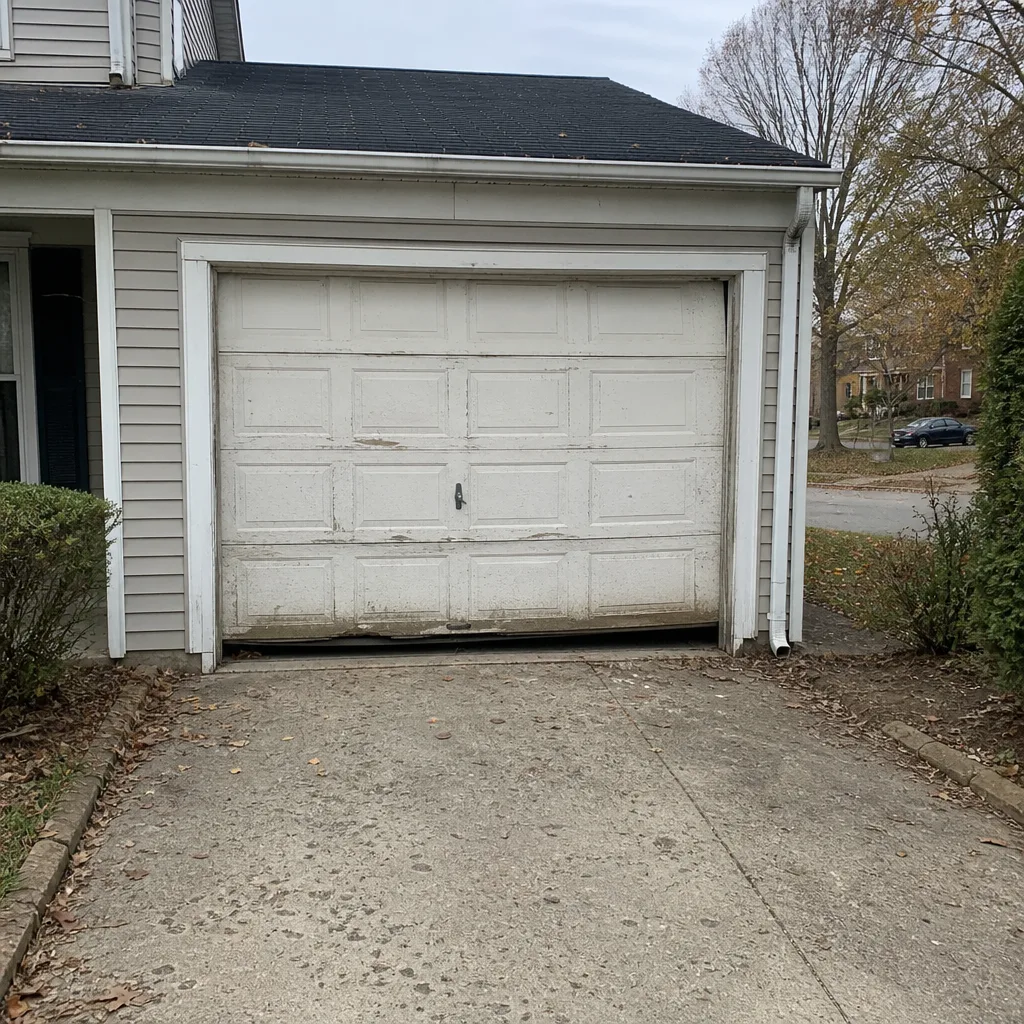
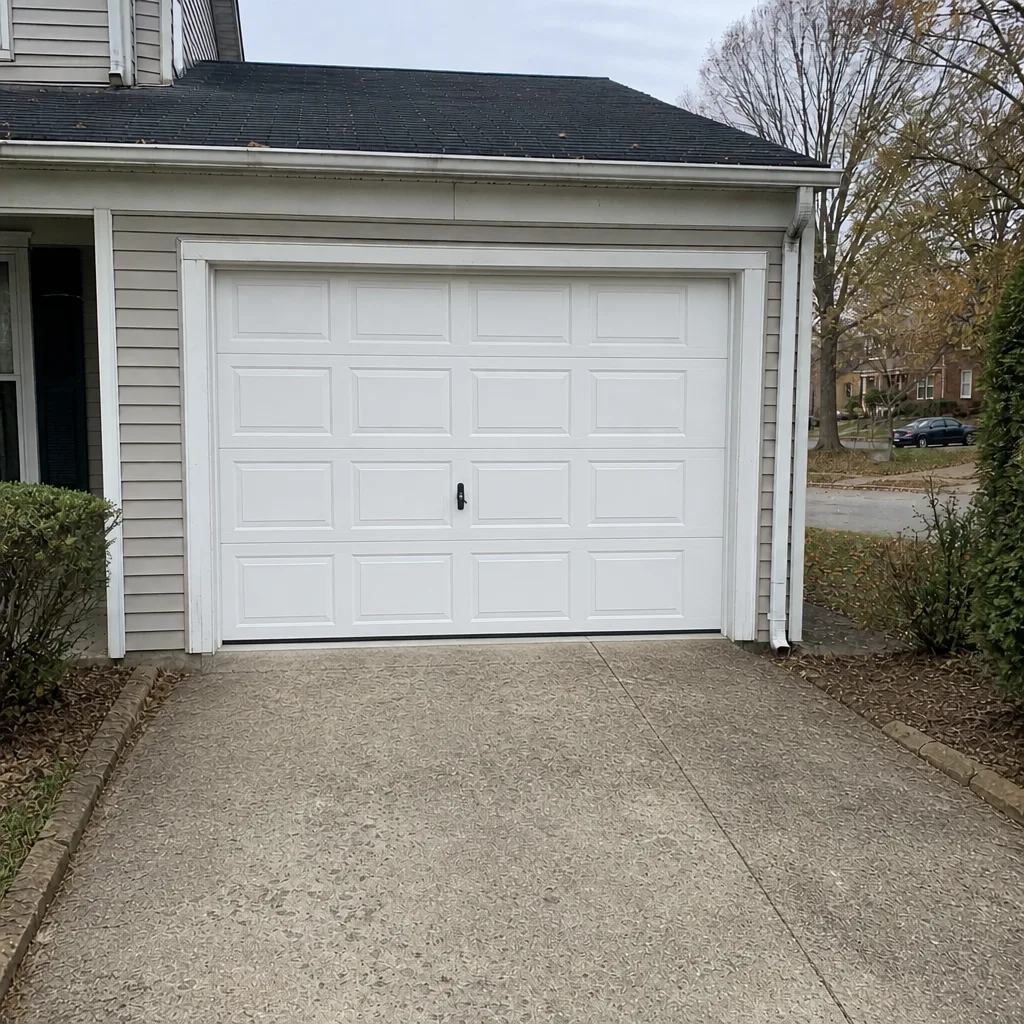
See the difference
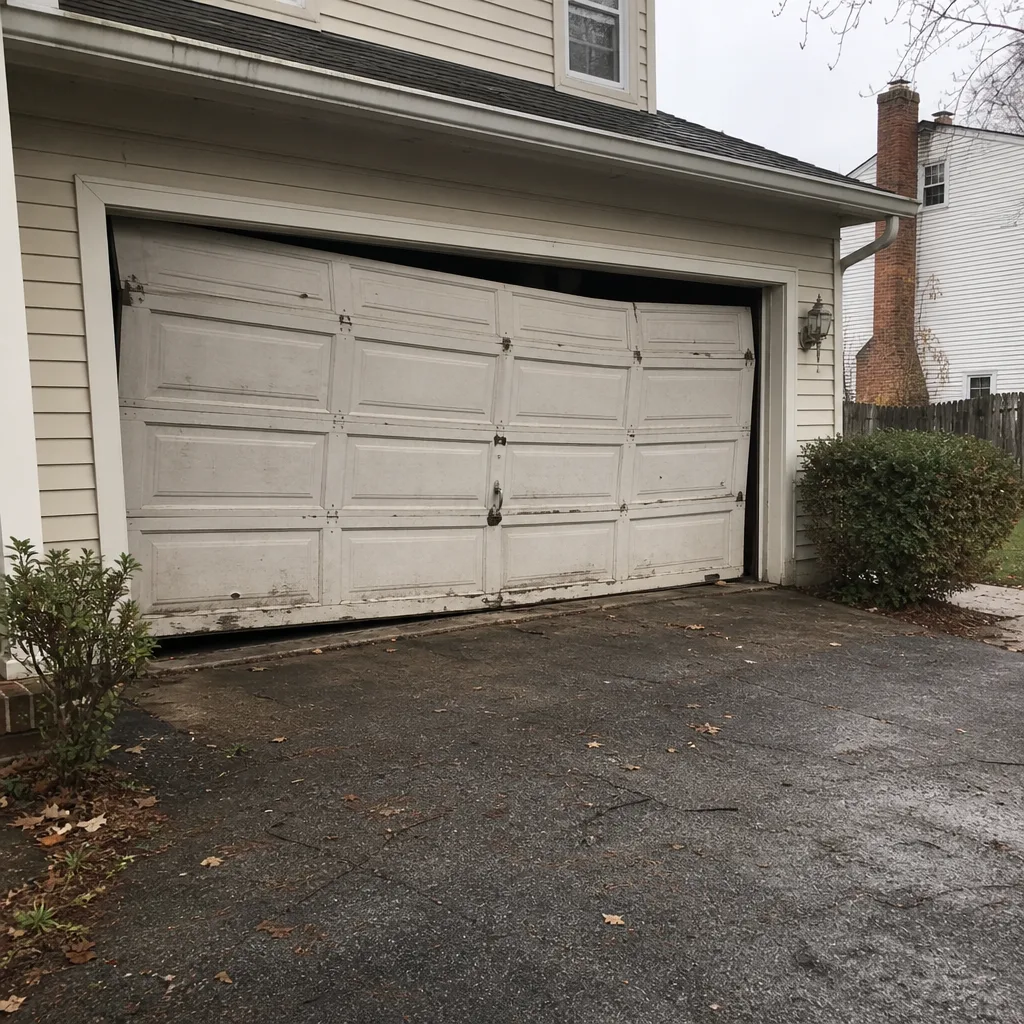 Before
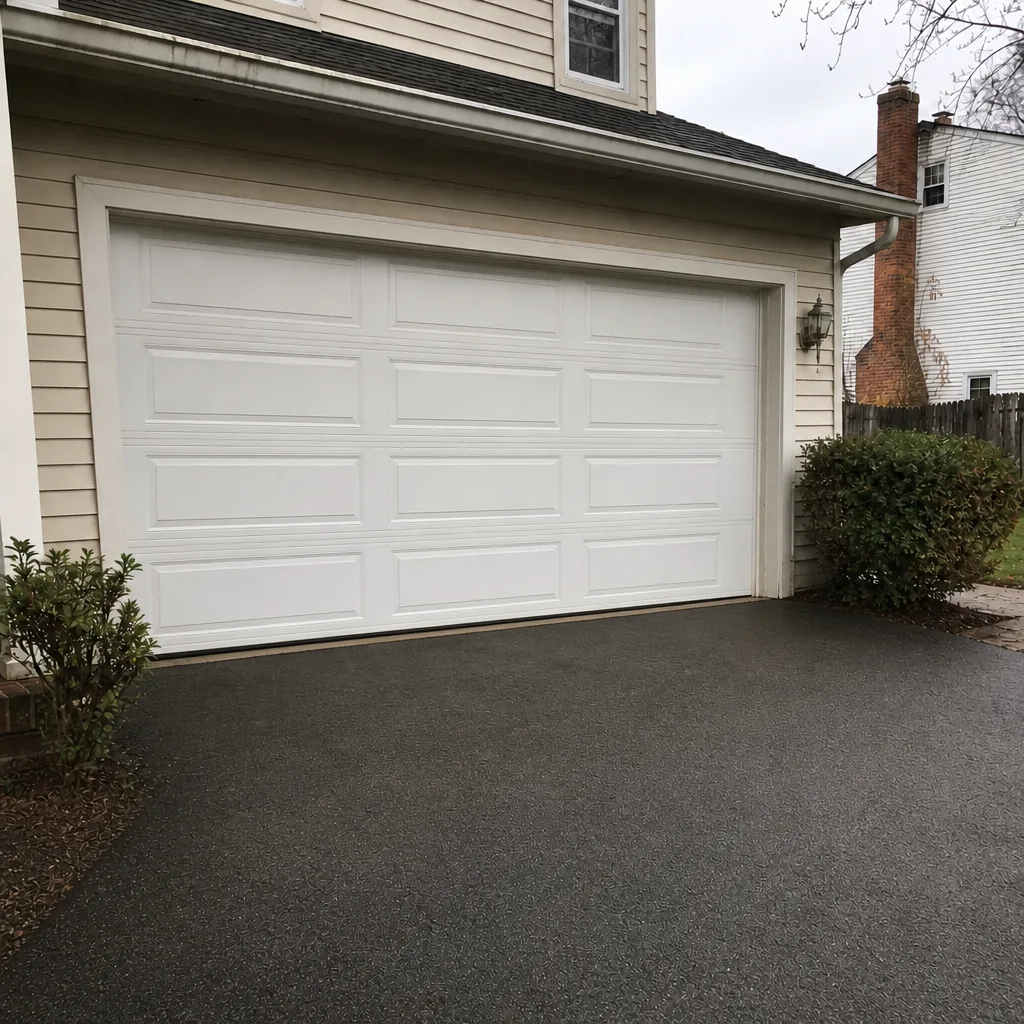 After
 Before
 After
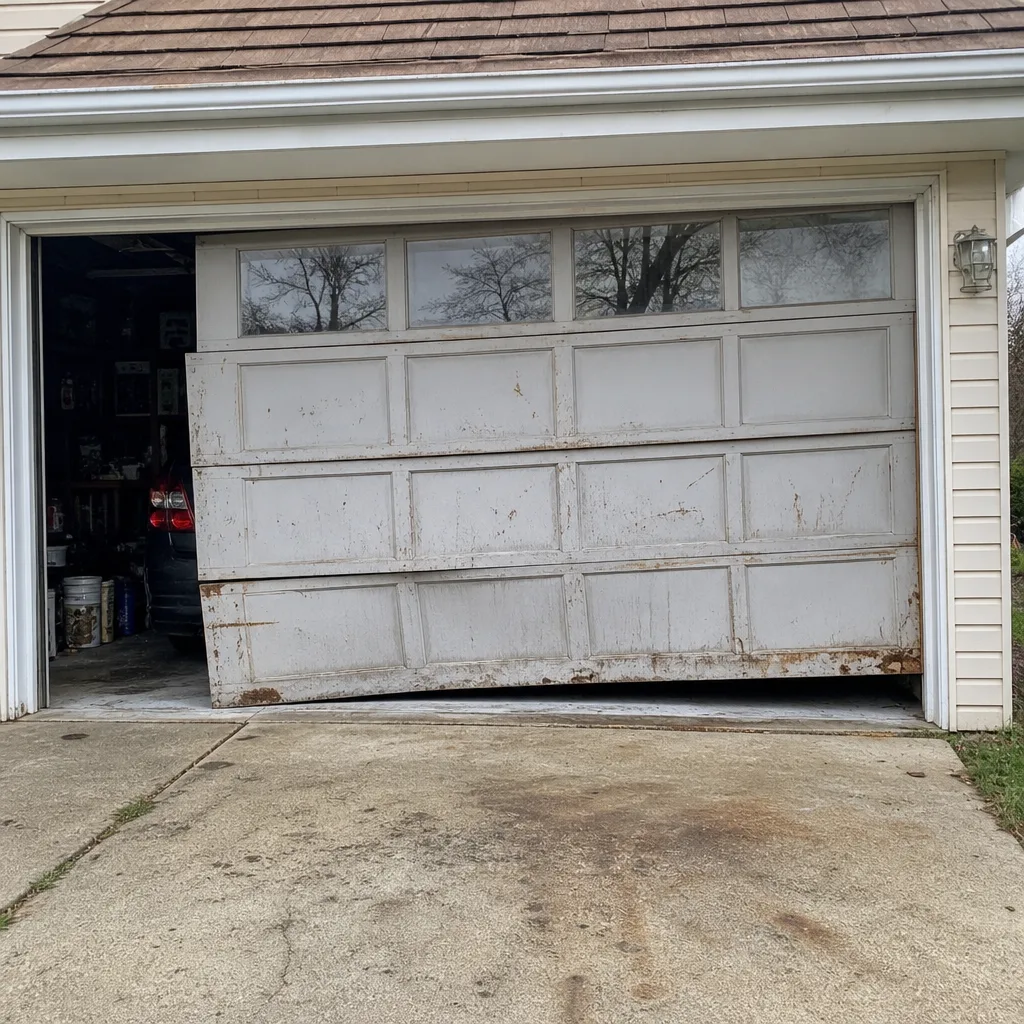 Before
 After
When to Call a Professional
Call a professional when the door won’t move at all, when the springs are broken or visibly failing, when the door is off track, when the opener cycles but the door doesn’t, or when the safety reverse isn’t working. Those are the situations where attempting a repair at home risks injury or additional damage. If you’re unsure, call anyway: our Germantown Garage Door Repair Pros service covers the full door system, so there’s no need to figure out which type of specialist to call. We work on the brand already on your home, whether that’s Amarr, Wayne Dalton, Craftsman, or Raynor, and we diagnose the actual problem rather than selling a system you don’t need. Germantown Garage Door Repair Pros offers free estimates in Germantown. Call (844) 575-0084 and we’ll assess what’s wrong and give you a written price before any work starts.
Frequently Asked Questions
Yes, using the manual release cord, but only if the springs are intact. Pull the cord firmly to disconnect the door from the opener, then lift by hand. If a spring is broken or you’re unsure of the door’s condition, do not pull the release. Call (844) 575-0084 and we’ll help you sort it out safely.
Check the opener housing for a battery compartment or a wall control with a battery indicator. The owner’s manual confirms the model and battery type. If you can’t find it, look up your model number on the manufacturer’s site or call us and we’ll help identify it. Testing the backup at least once a year is the only way to know it will work when you need it.
Turn off the opener, block access from the inside with plywood or heavy furniture, and lock the door between the garage and the house. Don’t force the door back onto its track. Call for emergency service and we’ll come out to secure it. Estimat
Emergency service is quoted per job based on what’s actually wrong. Common items fall into predictable ranges: a spring repair, an opener repair, or re-tracking a door each have their own pricing, and standard diagnostic and repair calls are typically in a moderate range for the area. The written estimate always sets the final price, quoted and agreed before any work starts. Call (844) 575-0084 for an exact quote. Estimates are free.
No. We quote a written price before any work starts, and that quote is the price. If the diagnosis changes the scope, we’ll tell you and get your approval before moving forward. You won’t get an invoice bigger than what we agreed to.
The local professionals we connect you with are licensed and insured as their state requires. Our technicians have up to 14 years of experience, and they work on all major door and opener brands. Call (844) 575-0084 to schedule and get a free estimate.
The Bottom Line
Garage door emergencies in Germantown are almost always preventable, and the prevention is simple: know where your manual release is, confirm whether your opener has battery backup, keep the emergency key and lubricant outside the garage, and check the springs before you pull anything. Ice storms and high wind cause most local failures, so watch the door during the cold months. When a spring is broken or the door is off track, stop and call a professional: those are the situations where the risk to the homeowner outweighs any savings from handling it yourself. A prepared homeowner turns an emergency into an inconvenience. Call (844) 575-0084 for a free estimate, and keep the number where you can find it when the garage door won’t open.
Written by the team at Germantown Garage Door Repair Pros.